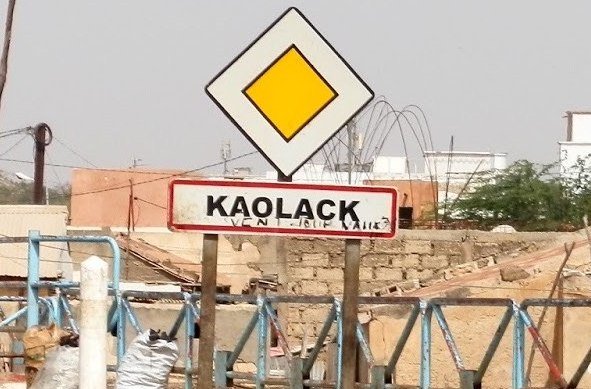
Beyond its economic role in Senegal’s groundnut basin, Kaolack has emerged as one of the most important spiritual centers of Islam in West Africa. Today, the city stands as a global Islamic hub, attracting thousands of devotees from across the world every year.
Kaolack’s international reputation is closely tied to Medina Baye, a neighborhood founded in the 20th century by Sheikh Ibrahim Niass, widely known as Baye Niass. A leading figure of the Tijaniyya Sufi order, he gave the movement a truly global dimension by welcoming disciples from Nigeria, Ghana, Sudan …., as well as the United States, Europe, and Asia.
Today, Medina Baye remains a spiritual crossroads, where worshippers, students of Islamic sciences, and pilgrims from around the world gather for inspiration and knowledge.
Kaolack’s influence goes far beyond Senegal’s borders. Mosques and cultural centers affiliated with Medina Baye can be found in major African capitals, as well as in London, Paris, Chicago, and New York. This vibrant diaspora continues to spread Baye Niass’s teachings, further elevating the city’s global profile.
Each year, thousands of pilgrims travel to Kaolack to participate in the Gamou, the celebration of the birth of the Prophet Muhammad (peace be upon him). The event transforms the city into an international meeting point, reflecting the vitality of Sufi Islam.
Beyond religious devotion, Kaolack is renowned for its universal message of peace, brotherhood, and openness. The spiritual leaders of Medina Baye actively promote intercultural and interfaith dialogue, positioning the city as a major voice in advocating for a tolerant and inclusive Islam.
In a world often challenged by religious and cultural tensions, Kaolack represents a model of spiritual rootedness and global outreach. Increasingly, researchers, journalists, and believers alike are turning their attention to this African spiritual hub, which continues to educate generations of Muslims from across the globe.
From its local roots to its global impact, Kaolack embodies the strength of an African Islam that is open, scholarly, and universal. At the heart of Senegal, the city is more than a religious center: it is a bridge between cultures and peoples, confirming its role as a global Islamic hub.